
Allergy Tests in Lab
Clinic-based laboratory allergy blood tests in the UK
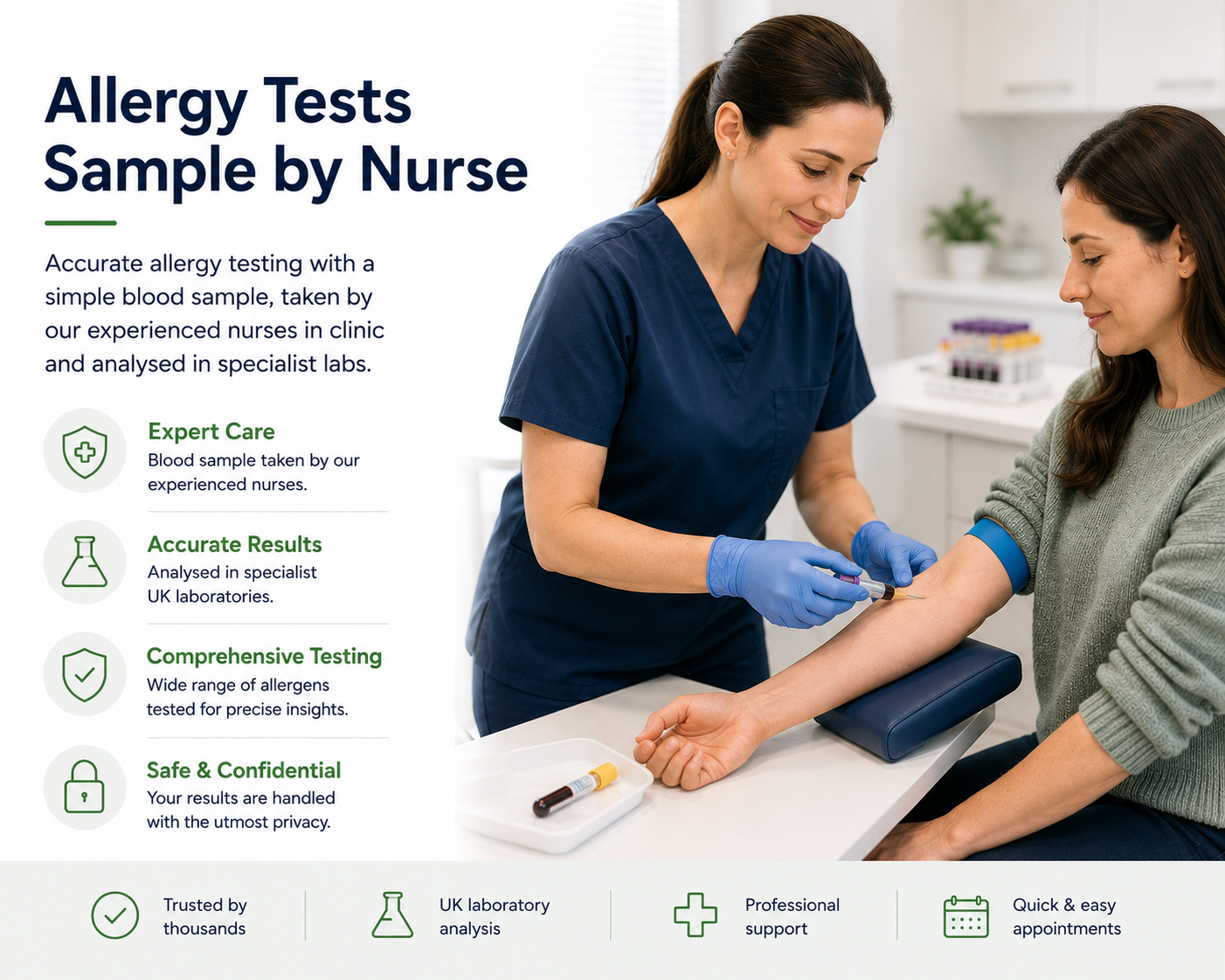
Allergy Tests – Sample by Nurse A qualified allergy nurse collects a blood sample for comprehensive laboratory allergy testing in our clinical setting.
Visit the clinic for your allergy blood test and choose the allergens you would like us to test. Laboratory allergy testing may help investigate suspected food, respiratory or environmental allergies.
Specific IgE blood tests can show sensitisation to an allergen, but results should be interpreted together with your symptoms and clinical history.
How lab allergy testing works
1. Select your test
Choose from food allergy, respiratory allergy, intolerance or comprehensive allergy test options.
2. Attend the clinic
Your blood sample is collected during your clinic visit and sent for laboratory analysis.
3. Receive your results
Your results help identify sensitisation and should be reviewed alongside your symptoms and medical history.
Important before choosing your tests
Allergy testing is most useful when it is targeted to allergens linked with your symptoms. A positive specific IgE result shows sensitisation, but does not always confirm clinical allergy.
If you are unsure which allergens to choose, consider a consultation or the ALEX allergy test for broader allergy profiling.
Search for a laboratory allergy test
Search by allergen name, food, animal, pollen, mould or symptom.
Choose test category
Intolerance Tests
Food intolerance is different from IgE-mediated food allergy. Please read each test description carefully before ordering.


Food Allergy Tests
Food allergy blood tests may help investigate suspected IgE-mediated reactions to foods such as nuts, milk, egg, wheat, fish, shellfish, fruits or other foods.

































































































































Respiratory Allergy Tests
Respiratory allergy blood tests can help investigate sensitisation to common inhalant allergens such as pollen, house dust mite, mould, cat, dog and other animal allergens.











Frequently asked questions
What is a laboratory allergy blood test?
A laboratory allergy blood test measures allergen-specific IgE antibodies in your blood. It can help identify sensitisation to selected allergens.
Can a blood test confirm an allergy?
A blood test result should be interpreted together with your symptoms and medical history. A positive result does not always mean you have a clinical allergy.
What is the difference between food allergy and food intolerance?
Food allergy usually involves the immune system and may cause rapid symptoms. Food intolerance is different and often causes delayed or digestive symptoms.
Which test should I choose?
Choose allergens that are linked with your symptoms. If you need broader testing, consider the ALEX allergy test or seek clinical advice before ordering.