
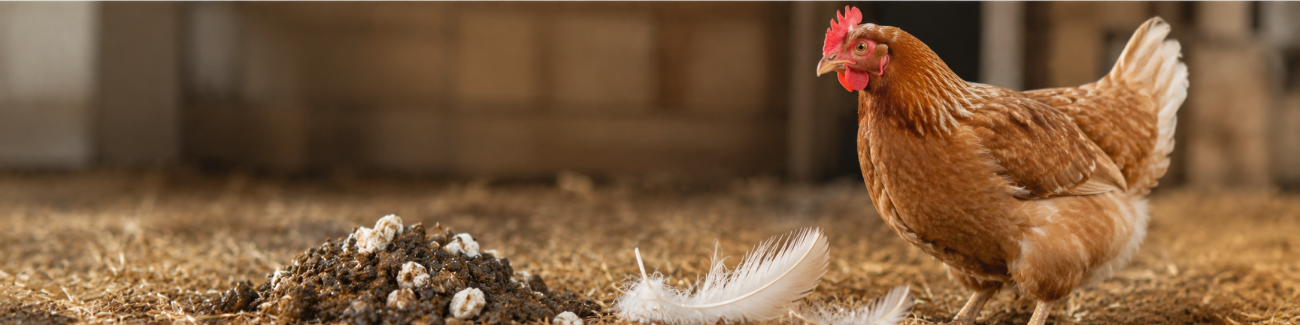
Description
e85 · Chicken feathers
e219 · Chicken serum proteins
Backyard chicken keeping has grown enormously in the UK over the past decade. With that growth has come a rise in the number of keepers experiencing respiratory and skin symptoms that they struggle to attribute to their birds. The problem is invisible: coop dust, dried droppings, shed feathers, and microscopic particles of skin and serum proteins fill the air every time you step into the coop, scatter feed, or move the birds. Over weeks and months of repeated exposure, the immune system of a susceptible person can become sensitised — and subsequent exposures can trigger progressively stronger reactions.
Our chicken keeper allergy test detects specific IgE antibodies to the three standardised chicken respiratory allergens: e218 (droppings), e85 (feathers), and e219 (serum proteins) — giving you a clear, clinically grounded answer about what your immune system is doing when you’re around your flock.
The three chicken allergens: e218, e85 & e219
Chicken-related respiratory allergy is not caused by a single substance. Three distinct allergen sources have been characterised and assigned standardised codes for specific IgE testing. All three can be present simultaneously in coop dust, on the birds’ bodies, and in the air around the flock.
The most pervasive source
Dried chicken droppings break down into fine particulate matter that becomes airborne when disturbed. The allergenic proteins they contain — including serum proteins shed via the gut — can remain suspended in coop air long after cleaning and are easily inhaled deep into the lungs.
Feather dust and bloom
Feathers continuously shed a fine dust called “bloom” — a powder-down coating that keeps feathers clean and waterproof. This dust is an extremely fine airborne allergen. Handling birds, changing bedding, or walking through a free-range area releases feather particles into the air and onto clothing.
The systemic trigger
Serum proteins from chicken blood and tissues — including albumin — are found in dried droppings, on feathers, and in airborne dander. Closely related to Gal d 5 (alpha-livetin), also implicated in Bird-Egg Syndrome. Sensitisation to serum proteins is frequently linked to Bird Keeper’s Lung.
All three allergens can be present in coop dust at the same time. Testing for just one may give an incomplete picture. This kit screens for all three from a single finger-prick blood sample — making it the most thorough at-home respiratory allergy test available for chicken keepers.
Symptoms of a chicken keeper allergy
Chicken allergy symptoms in keepers are primarily respiratory, because the main route of exposure is inhalation of coop dust and airborne particles. The key distinguishing feature is that symptoms worsen around the birds or the coop and tend to improve when you are away from them.
Persistent dry cough — especially after cleaning the coop, handling birds, or changing bedding
Breathlessness — shortness of breath during or after time spent with your flock
Wheezing — a whistling sound when breathing, which may worsen at night after coop work
Rhinitis — sneezing, runny nose, or persistent nasal congestion around the birds
Itchy, watery, or red eyes — conjunctivitis-like symptoms triggered by feather dust or dander
Chills or low-grade fever — flu-like symptoms that can develop hours after exposure in more serious reactions
Fatigue — unexplained tiredness or malaise that follows exposure to the coop environment
Skin reactions — itching, hives, or redness after direct contact with feathers, droppings, or the birds themselves
⚠️ Bird Keeper’s Lung — a serious risk for regular keepers
Repeated inhalation of chicken allergens can cause Bird Keeper’s Lung (also called Bird Fancier’s Lung or extrinsic allergic alveolitis) — an inflammatory lung condition affecting the alveoli and terminal bronchioles. Symptoms can begin after months or years of regular exposure and include worsening breathlessness, a persistent cough, chills, and fever. If undiagnosed and exposure continues, the condition can progress to chronic lung disease and, in the most severe cases, irreversible pulmonary fibrosis. If you have any of these symptoms, please seek medical advice promptly.
Who should consider testing?
Chicken allergy can develop in anyone who has regular contact with the birds — not just people with a prior history of allergies. Sensitisation builds up over time, meaning someone who has kept chickens for years without problems can still develop a reaction. You should consider testing if any of the following apply:
-
◆
You keep backyard chickens and have developed unexplained respiratory symptoms in the past year -
◆
Your cough or breathlessness is noticeably worse on days you spend time with your flock or clean the coop -
◆
You work or have worked in poultry farming or a related agricultural setting -
◆
Your symptoms improve significantly when you are away from the chickens (e.g. on holiday) -
◆
You have existing asthma and have noticed it worsening since acquiring chickens -
◆
You handle feathers, hatching eggs, or poultry products regularly -
◆
You have been diagnosed with Bird Fancier’s Lung or extrinsic allergic alveolitis and want to confirm the specific allergen source -
◆
You have a child who spends regular time around the chickens and has developed unexplained respiratory symptoms
What happens inside your body
When you breathe in coop dust, your immune system is exposed to a complex mixture of organic particles — dried droppings, feather bloom, skin dander, serum proteins, bacteria, and fungal spores. In sensitised individuals, the immune system produces specific IgE antibodies against the avian proteins in this dust (allergens e218, e85, and e219). On subsequent exposures, these IgE antibodies trigger the release of histamine and other inflammatory mediators, causing the allergy symptoms described above.
In the more serious condition of Bird Keeper’s Lung (extrinsic allergic alveolitis), the immune response goes deeper — involving Type III (IgG-mediated immune complex) and Type IV (T-cell-mediated) hypersensitivity reactions that cause inflammation within the lung tissue itself. This is why early detection and avoidance matters: the longer sensitised exposure continues, the greater the risk of progressing to a chronic, potentially irreversible lung condition.
Chicken serum proteins (e219) share structural similarities with egg yolk proteins (alpha-livetin / Gal d 5). This means some individuals sensitised to chicken serum proteins via respiratory exposure may also develop reactions to eggs — a phenomenon known as Bird-Egg Syndrome. Testing for e219 is therefore useful not only for respiratory allergy management, but for understanding your broader sensitisation profile.
How the test works
No clinic visit required. The entire process takes place at home.
Order & receive
Your kit arrives by post — lancets, sample cards, step-by-step instructions, and a pre-paid return envelope.
Collect your sample
Two simple finger-prick blood drops. Takes just a few minutes, with clear guidance at every step.
Post it back
Use the pre-paid return envelope — no additional cost or arrangements needed.
View your results
Your IgE results for e218, e85, and e219 are uploaded to your secure patient portal within 1 week of receipt.
Everything chicken keepers need in one kit
All three allergens, one sample
e218, e85, and e219 tested from the same finger-prick blood sample. No need to order or post multiple separate tests.
Genuine home collection
No phlebotomist, no appointment, no waiting room. Collect at home, post back, get results.
Standardised allergen codes
We test to the internationally recognised allergen codes used in clinical allergy practice worldwide — not generic “chicken” extracts.
Expert follow-up support
Our allergy specialists can provide personalised guidance once you receive your results.
Secure results portal
Your results are delivered to a private, secure patient portal — accessible whenever you need them, ready to share with your GP or allergist.
Combine with other allergens
Remote collection supports up to 3 allergens per sample per checkout. Laboratory collection has no limit.
Test details at a glance
- ✓Allergens: Chicken droppings (e218), chicken feathers (e85), chicken serum proteins (e219)
- ✓Test type: Specific IgE blood test
- ✓Sample: Finger-prick (two samples provided in the kit)
- ✓Collection: Remote (home) or laboratory
- ✓Remote: up to 3 allergens from a single sample per checkout
- ✓Laboratory: unlimited allergens simultaneously
- ✓Turnaround: results within 1 week of sample receipt
- ✓Results delivered to your secure patient portal
Frequently asked questions
Can you develop a chicken allergy after years of keeping them without problems?
Yes — and this is common. Allergic sensitisation builds up gradually with repeated exposure. Many keepers develop symptoms after one, two, or even several years of contact with their birds, having previously had no reaction at all. The development of symptoms in someone who has kept chickens for a long time does not mean they are not allergic; it may simply mean they have now crossed the sensitisation threshold.
What is Bird Keeper’s Lung and how serious is it?
Bird Keeper’s Lung (extrinsic allergic alveolitis or hypersensitivity pneumonitis) is an inflammatory condition of the deep lung tissue caused by repeated inhalation of avian proteins. It is more serious than a typical allergic reaction because it involves the lung parenchyma and alveoli, not just the upper airways. In its acute form it produces flu-like symptoms and breathlessness; if exposure continues, it can become chronic and, in some cases, lead to irreversible pulmonary fibrosis. Early diagnosis and avoidance of the trigger are critical.
Why does this test cover three allergen codes rather than just one?
Because droppings (e218), feathers (e85), and serum proteins (e219) are chemically distinct allergens — a person can be sensitised to one, two, or all three. Testing only one may miss the true driver of your symptoms. The three are also associated with slightly different clinical pictures: e218 and e85 are the main causes of IgE-mediated respiratory allergy, while e219 (serum proteins) is most closely associated with Bird Keeper’s Lung and Bird-Egg Syndrome.
What is Bird-Egg Syndrome?
Bird-Egg Syndrome is a condition in which sensitisation to chicken serum proteins (particularly alpha-livetin / Gal d 5, tested via e219) — usually gained through respiratory exposure — leads to cross-reactive IgE-mediated reactions to egg yolk proteins. In practical terms, someone who has become sensitised to chicken serum proteins via coop dust inhalation may subsequently develop reactions to eggs. Testing for e219 can help identify whether this cross-reactivity is relevant for you.
I have asthma — am I at higher risk?
Yes. People with existing asthma or other atopic conditions are more susceptible to developing occupational or environmental respiratory allergies, including those triggered by poultry dust. Continuous exposure to coop dust can worsen existing asthma and, in some individuals, accelerate progression to more serious lung conditions. Wearing an N95 mask in the coop and having someone else handle cleaning where possible is strongly advisable.
Can I test for other allergens at the same time?
Yes. With remote (home) collection, up to 3 allergens can be tested from the same finger-prick sample in one checkout. For laboratory collection there is no limit — making it straightforward to screen for other bird allergens (pigeon, budgerigar, parrot) or other environmental and food allergens alongside your chicken panel.
How do I access my results?
Results are delivered to your secure patient portal within 1 week of sample receipt. Register before sending back your sample at ukallergy.carebit.co/patients/accounts/sign-up.
This allergy test screens for specific IgE antibodies to chicken droppings (e218), chicken feathers (e85), and chicken serum proteins (e219). Suitable for self-collection (remote) or laboratory collection. Remote collection: up to 3 allergens per sample per checkout. Laboratory collection: no allergen limit. Results are delivered to your secure patient portal within 1 week of sample receipt. This test is for informational purposes only and does not constitute medical advice or a clinical diagnosis. If you are experiencing severe or worsening respiratory symptoms, please seek medical attention promptly.


