Description
Rabbit allergy can affect the nose, eyes, lungs and skin. Symptoms may appear after touching rabbits, cleaning cages, handling bedding, or simply spending time in rooms where rabbits live. Rabbit allergens can become airborne and remain in household dust, meaning symptoms may continue even when the rabbit is not directly next to you.
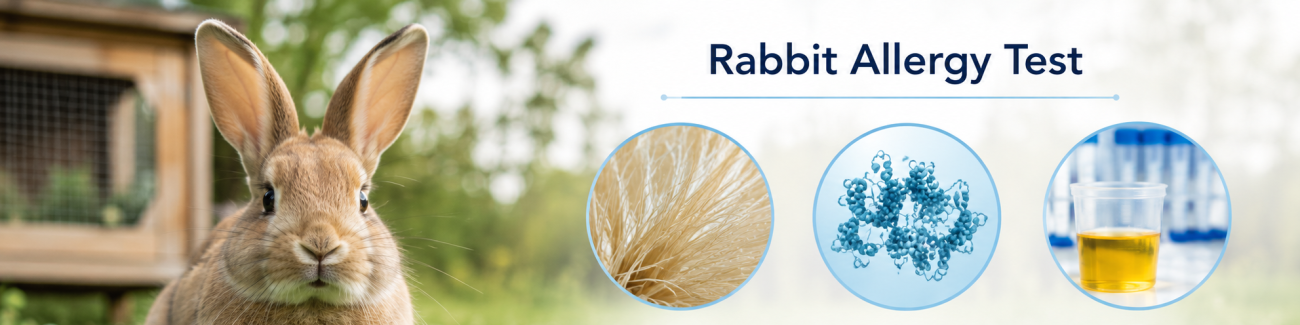
Our Rabbit Allergy Test measures specific IgE antibodies to three clinically relevant rabbit allergens: Rabbit epithelium (e82), Rabbit serum proteins (e206) and Rabbit urine proteins (e211). Testing all three provides a broader assessment than rabbit dander testing alone.
Symptoms of rabbit allergy
Rabbit allergy symptoms can develop quickly after exposure or build gradually in homes where rabbit allergens are present in carpets, soft furnishings, clothing, bedding or indoor dust.
Sneezing — especially after handling rabbits, cleaning cages or entering rooms where rabbits live
Runny or blocked nose — persistent congestion, watery discharge or an itchy nose
Itchy, red or watery eyes — irritation, swollen eyelids or allergic conjunctivitis symptoms
Coughing — a dry or tickly cough after rabbit exposure or cage cleaning
Wheezing or breathlessness — asthma-type symptoms triggered by airborne rabbit allergens
Chest tightness — tight, heavy or restricted breathing after contact with rabbits
Hives or skin rash — itchy raised welts after touching rabbits or contaminated surfaces
Eczema flare-ups — itchy, inflamed or dry skin after repeated rabbit allergen exposure
⚠️ When to seek urgent medical help
If rabbit exposure causes severe breathlessness, rapidly worsening wheeze, swelling of the lips, tongue or throat, difficulty swallowing, collapse or symptoms of anaphylaxis, seek urgent medical help immediately. Call 999 if symptoms are severe or life-threatening.
What is rabbit allergy?
Rabbit allergy is an immune-mediated reaction to proteins produced by rabbits. These proteins may be found in rabbit skin particles, saliva, urine, serum and body tissues. When a sensitised person inhales or touches these allergens, the immune system may produce an allergic response involving specific IgE antibodies.
Many people describe this as being “allergic to rabbit fur”, but the fur itself is usually not the main allergen. The problem is more often the microscopic proteins carried on the fur, shed into the air, or released into the environment through urine, skin cells and saliva.
-
◆
Rabbit allergy may cause allergic rhinitis, conjunctivitis, asthma symptoms, urticaria or eczema flare-ups. -
◆
Rabbit allergens can become airborne, especially when cages, bedding, hay or litter trays are disturbed. -
◆
Symptoms may occur in pet owners, children, veterinary staff, animal handlers, breeders, farmers and laboratory workers. -
◆
Allergic symptoms may persist even after direct rabbit contact because allergens can remain in indoor dust and soft furnishings. -
◆
Diagnosis should combine your symptoms, exposure history and evidence of sensitisation, such as specific IgE blood testing.
Why test three rabbit allergens? Rabbit allergy may involve different allergen sources. This panel includes rabbit epithelium (e82), rabbit serum proteins (e206) and rabbit urine proteins (e211), giving a more complete picture than testing rabbit dander alone.
Why can rabbit allergy be a serious problem?
Rabbit allergy can be more difficult to recognise than cat or dog allergy because symptoms are often blamed on hay, bedding, dust or cleaning products. However, rabbit allergens can be powerful triggers in sensitised individuals, particularly where rabbits are kept indoors.
For pet owners, rabbit allergy can affect sleep, comfort at home and quality of life. For people with asthma, rabbit exposure may contribute to coughing, wheezing, breathlessness and chest tightness. In occupational settings, repeated exposure may increase symptoms over time.
Identifying rabbit allergy can help guide practical steps, such as reducing exposure, improving cleaning routines, avoiding close contact where needed, reviewing asthma control and seeking specialist allergy advice.
What does this allergy test measure?
This is a specific IgE blood test. It measures IgE antibodies in your blood against three rabbit allergen sources:
| Allergen code | Allergen tested |
|---|---|
| e82 | Rabbit epithelium — proteins from rabbit skin particles and dander |
| e206 | Rabbit serum proteins — proteins found in rabbit blood and body tissues |
| e211 | Rabbit urine proteins — proteins from rabbit urine that may become airborne after drying |
A positive result indicates sensitisation to one or more rabbit allergens. Your result should be interpreted alongside your symptoms and exposure history, as sensitisation does not always mean the allergen is definitely causing your symptoms.
Who should consider this rabbit allergy test?
This test may be suitable if you experience symptoms after contact with rabbits or rabbit environments.
-
◆
Pet rabbit owners with sneezing, blocked nose, itchy eyes, cough or wheeze. -
◆
Children or adults whose asthma worsens around rabbits. -
◆
People with eczema or hives after handling rabbits. -
◆
Veterinary staff, animal handlers, breeders, farmers or laboratory workers. -
◆
Anyone with unexplained indoor allergy symptoms where rabbit exposure may be relevant.
How the test works
You can complete this test remotely from home using a finger-prick sample, or you can have your blood sample collected in the laboratory.
Order & receive
Your home kit is sent with lancets, collection materials, instructions and return packaging.
Collect your sample
Collect a small finger-prick blood sample at home using the step-by-step instructions provided.
Post it back
Return your sample to the laboratory using the packaging provided with your kit.
Receive results
Your results are uploaded to your secure patient portal once laboratory analysis is complete.
Why choose our rabbit allergy test?
Three-allergen panel
Includes rabbit epithelium, serum proteins and urine proteins for broader assessment.
Pet and occupational exposure
Suitable for pet owners, animal handlers, veterinary staff and laboratory workers.
Specific IgE blood test
Laboratory-based testing measuring allergen-specific IgE antibodies in your blood.
No need to stop antihistamines
Specific IgE blood testing is not affected by antihistamine medication.
Home or laboratory collection
Choose remote finger-prick collection or laboratory sample collection.
Secure results portal
Your results are delivered privately through your secure online patient portal.
Test details at a glance
- ✓Allergens tested: Rabbit epithelium e82, Rabbit serum proteins e206 and Rabbit urine proteins e211
- ✓Test type: Specific IgE blood test
- ✓Sample: Finger-prick blood sample for remote collection
- ✓Collection: Remote home collection or laboratory collection
- ✓Remote collection: this panel already includes 3 allergens, so it cannot be combined with additional allergens in the same remote order
- ✓Laboratory collection: no limit on the number of allergens requested from the same sample
- ✓Results delivered to your secure patient portal
How can rabbit allergy be managed?
If your test confirms sensitisation and your symptoms match rabbit allergy, management may include reducing exposure, controlling indoor allergen levels and seeking medical advice for persistent rhinitis, asthma or eczema symptoms.
-
◆
Avoid keeping rabbits in bedrooms or sleeping areas. -
◆
Wear gloves and a mask when cleaning hutches, litter trays or bedding. -
◆
Improve ventilation and reduce dust reservoirs such as carpets, soft furnishings and heavy curtains where possible. -
◆
Wash hands and change clothing after handling rabbits or cleaning cages. -
◆
Consider regular cleaning using a vacuum cleaner with a HEPA filter. -
◆
Discuss antihistamines, nasal sprays, asthma medication or specialist allergy advice with a healthcare professional if symptoms persist.
Frequently asked questions
Can you really be allergic to rabbits?
Yes. Rabbit allergy is caused by immune sensitisation to rabbit proteins found in skin particles, saliva, urine, serum and body tissues. These allergens can trigger rhinitis, conjunctivitis, asthma symptoms, hives or eczema flare-ups.
Is rabbit allergy caused by fur?
Not usually by the fur itself. Rabbit fur can carry allergenic proteins from skin particles, saliva and urine, but the immune reaction is usually to the proteins rather than to the hair fibre.
What is the difference between e82, e206 and e211?
e82 measures IgE to rabbit epithelium, e206 measures IgE to rabbit serum proteins, and e211 measures IgE to rabbit urine proteins. Testing all three helps assess different sources of rabbit allergen exposure.
Can rabbit allergy cause asthma?
Yes. Rabbit allergens can trigger asthma symptoms in sensitised people, including coughing, wheezing, chest tightness and breathlessness. If you have asthma symptoms around rabbits, you should discuss this with a healthcare professional.
Can I develop rabbit allergy after owning a rabbit for years?
Yes. Allergic sensitisation can develop over time, even after months or years of exposure. Symptoms may gradually become more noticeable with repeated indoor exposure.
Do I need to stop antihistamines before this test?
No. Antihistamines do not affect specific IgE blood test results. This is one advantage of blood testing compared with skin prick testing.
Can this rabbit allergy test be combined with other allergens?
For remote collection, up to three allergens can be tested from one sample. This rabbit panel already includes three allergens, so it cannot be combined with additional allergens in the same remote order. For laboratory collection, there is no limit on the number of allergens tested.
How do I access my results?
Your results will be uploaded to your secure patient portal. Please create your portal account before testing at ukallergy.carebit.co/patients/accounts/sign-up.
What should I do if my result is positive?
A positive result should be interpreted together with your symptoms and exposure history. If rabbit allergy is likely, you may benefit from exposure reduction, symptom treatment, asthma review where relevant and specialist allergy advice.
Keywords:
Rabbit Allergy Test, Rabbit Allergy Blood Test, Rabbit Specific IgE Test, Rabbit Epithelium e82, Rabbit Serum Proteins e206, Rabbit Urine Proteins e211, Rabbit Dander Allergy, Pet Rabbit Allergy, Rabbit Allergy Symptoms, Rabbit Allergy Blood Test UK, Indoor Pet Allergy Test, Allergy Blood Test UK, Specific IgE Rabbit Test, Rabbit Asthma Allergy, Rabbit Eczema Allergy, Animal Allergy Testing UK.
This allergy test is suitable for remote self-collection or laboratory sample collection. Remote collection supports a maximum of 3 allergens per sample; as this rabbit allergy panel includes three allergens, it cannot be combined with additional allergens in the same remote order. Laboratory collection has no limit on the number of allergens requested. Results are delivered to your secure patient portal. This test is for informational and diagnostic support purposes and does not replace medical advice. If you have severe breathing symptoms or suspect a medical emergency, call 999 immediately.