Description
🌿 Timothy grass (g6) · Late spring — May to Aug
Hay fever (seasonal allergic rhinoconjunctivitis) affects approximately 1 in 4 adults in the UK — around 13 million people — making it one of the most prevalent allergic conditions in the country. Yet many sufferers spend years managing symptoms without ever identifying the precise pollen trigger. This matters enormously, because allergen immunotherapy (desensitisation) — the only treatment that addresses the underlying cause of hay fever rather than just the symptoms — is now available for both silver birch pollen and timothy grass pollen, and requires a confirmed specific IgE diagnosis to access.
This test screens for IgE antibodies to the two most clinically important UK hay fever allergens: t3 (silver birch, Betula verrucosa) and g6 (timothy grass, Phleum pratense) — from a single at-home finger-prick blood sample. Your result tells you whether you are sensitised to one, the other, or both, giving your GP or allergy specialist the clinical evidence they need to recommend appropriate treatment including desensitisation.
Two different seasons. One test.
Birch and grass pollen season in the UK are sequential — meaning if you are sensitised to both, you may experience hay fever symptoms for six months or more, from February through to August. This is one of the most common patterns seen in UK allergy clinics, and one of the most important reasons to test for both allergens at the same time.
t3 — Silver birch pollen
Early season: February – May
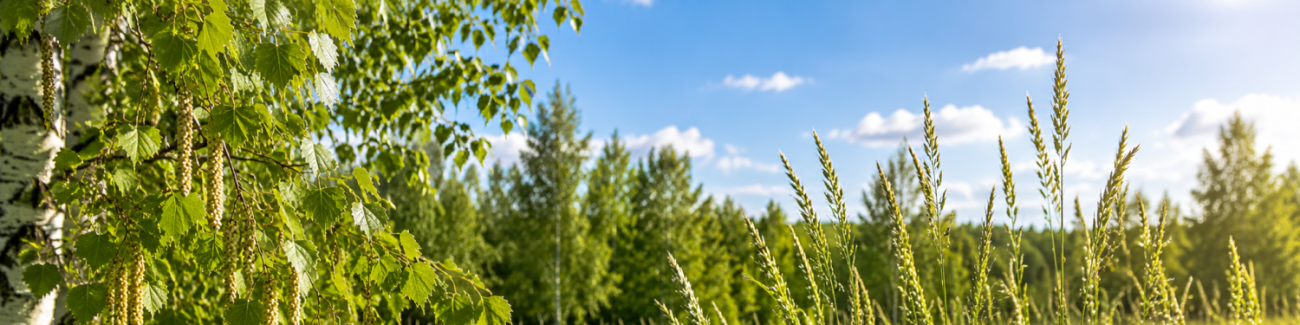
Betula verrucosa (silver birch) produces yellow pollen via catkins in early spring. Birch pollen is highly allergenic and one of the most potent tree pollen allergens in northern Europe.
Birch pollen can also cross-react with hazel and alder pollen, meaning symptoms may start as early as January and extend to late May or early June.
g6 — Timothy grass pollen
Late season: May – August
Phleum pratense (timothy grass) is the most widely used reference allergen for grass pollen allergy worldwide, and the allergen from which all major commercial grass pollen immunotherapy products are standardised.
IgE reactivity to grass pollen allergens is found in approximately 40% of allergic patients and 20% of the general population — making it the single most common cause of hay fever in the UK.
Both sensitisations are common. Many people with hay fever are sensitised to both tree and grass pollen. If you experience symptoms in early spring and again in summer, there is a strong clinical likelihood that both t3 and g6 are contributing. Testing both at once avoids the need for repeated separate tests and gives your specialist the full picture needed to plan immunotherapy.
The allergens in detail
Silver birch: Bet v 1 and beyond
- ◆Major allergen: Bet v 1 — a PR-10 protein present in nearly all birch pollen-allergic patients in Europe (92% sensitisation in published studies)
- ◆Birch pollen allergy is thought to affect approximately 25% of UK hay fever sufferers
- ◆Bet v 1 sensitisation produces cross-reactivity with Oral Allergy Syndrome (OAS) in approximately 70% of birch-allergic patients — causing mouth itching and lip tingling after eating raw apple, hazelnut, carrot, cherry, pear, celery, and peach
- ◆Cross-reactivity with hazel (Cor a 1), alder, and hornbeam pollen means symptoms may precede birch season itself
- ◆Birch pollen sensitisation typically begins in adolescence and progresses over years to include food cross-reactivities
Timothy grass: the reference standard
- ◆Major allergens: Phl p 1, Phl p 2, Phl p 5, and Phl p 6 — all present in most commercially available immunotherapy extracts
- ◆IgE reactivity to grass pollen is found in 40% of allergic patients and 20% of the general population
- ◆P. pratense is the best-characterised allergenic grass and is used as the reference standard for all major NICE-approved grass pollen immunotherapy products (e.g. Grazax, NICE TA246)
- ◆Grass pollen allergy is strongly associated with allergic asthma — exposure during peak season can worsen existing asthma and trigger new asthma onset in sensitised individuals
- ◆A positive g6 IgE result is the prerequisite for accessing NICE-approved sublingual grass pollen immunotherapy (Grazax), which begins 16 weeks before the pollen season
Symptoms of birch and grass pollen allergy
The core symptoms of both birch and grass pollen allergy are similar, but the timing and some additional features can help point toward the responsible pollen:
Sneezing and runny nose — often the first and most disruptive symptom; worsens on high pollen count days outdoors
Itchy, red, watery eyes — allergic conjunctivitis; may be severe enough to blur vision or prevent wearing contact lenses during season
Nasal congestion — blocked, itchy, or stuffy nose that makes sleeping difficult and impairs concentration
Wheezing or breathlessness — particularly with grass pollen; pollen allergy is a common trigger for seasonal asthma exacerbations
Fatigue and impaired sleep — hay fever significantly reduces sleep quality; sedating antihistamines worsen cognitive impairment during the day
Oral Allergy Syndrome (birch-specific) — mouth tingling or lip swelling after eating raw apple, hazelnut, carrot, celery, cherry, or pear; caused by cross-reactivity between Bet v 1 and food proteins
Brain fog and poor concentration — hay fever has a well-documented negative impact on exam performance, work productivity, and mood during peak season
Itchy palate or ears — a common but often overlooked symptom of pollen allergy; caused by IgE-mast cell activation in the upper airway mucosa
Why knowing your trigger matters: desensitisation is now available
Antihistamines and nasal steroids can reduce hay fever symptoms, but they do not change the underlying immune response. A UK study found that even with both daily antihistamines and a corticosteroid nasal spray, only 38% of birch pollen allergy sufferers reported good symptom control — meaning up to 62% spend pollen season still fighting their symptoms.
Allergen immunotherapy (AIT) — also known as desensitisation or the “allergy vaccine” — is the only treatment that modifies the immune system’s response to an allergen, reducing symptoms and medication use long-term, and in many cases providing lasting benefit after the course is completed. Two licensed UK immunotherapy products are now available specifically for the allergens in this test:
Grazax® — grass pollen (g6)
A sublingual (under-the-tongue) tablet containing standardised timothy grass pollen extract. NICE-approved (TA246) for severe grass pollen rhinitis. Treatment begins 16 weeks before grass pollen season and continues for three years. A confirmed positive IgE to g6 is required to access this treatment.
Itulazax® — birch pollen (t3)
A sublingual tablet licensed in England for adults with severe silver birch pollen allergic rhinoconjunctivitis. Works by reducing the number of IgE antibodies triggered by birch pollen and increasing protective blocking antibodies. Specifically approved for patients who have not responded adequately to standard treatments. A confirmed birch IgE diagnosis is required to qualify.
Desensitisation requires a confirmed IgE diagnosis. Both Grazax and Itulazax require a positive specific IgE blood test or skin prick test showing reaction to the relevant pollen allergen before treatment can begin. A confirmed t3 or g6 IgE result from this test is exactly what your GP or allergy specialist needs to initiate an immunotherapy referral. Clinical studies on intralymphatic immunotherapy with birch and 5-grass pollen extracts have demonstrated significant reductions in rhinoconjunctivitis symptom scores, reduced medication use, and improved quality of life across multiple pollen seasons following treatment.
Birch pollen and Oral Allergy Syndrome (Pollen Food Syndrome)
If you are allergic to birch pollen, there is approximately a 70% chance you will also experience reactions to certain raw foods — a condition known as Pollen Food Syndrome (PFS) or Oral Allergy Syndrome (OAS). This is not a separate food allergy, but a cross-reactivity: the major birch pollen allergen Bet v 1 shares a similar protein structure to proteins found in several common fruits, vegetables, and nuts.
Foods commonly involved include:
🌰 Hazelnut
🥕 Carrot
🍒 Cherry
🍐 Pear
🥬 Celery
🍑 Peach
🍅 Tomato
Symptoms of OAS are typically mild — mouth tingling, lip itching, or mild throat irritation — and usually resolve quickly. However, confirming a positive t3 result alongside your OAS history helps your doctor understand the complete picture of your birch sensitisation and can guide advice on food avoidance and safe eating strategies.
How the test works
No clinic visit required. Test from home in minutes.
Order & receive
Your kit arrives by post with lancets, sample cards, instructions, and a pre-paid return envelope.
Collect your sample
Two simple finger-prick blood drops. Takes just a few minutes at home.
Post it back
Use the included pre-paid return envelope — no extra cost needed.
View your results
Your t3 and g6 specific IgE levels appear in your secure portal within 1 week of sample receipt.
Test details at a glance
- ✓Allergens: Silver birch pollen (t3) and Timothy grass pollen (g6)
- ✓Test type: Specific IgE blood test
- ✓Sample: Finger-prick (two samples in the kit)
- ✓Collection: Remote (home) or laboratory
- ✓Remote: up to 3 allergens from one sample per checkout
- ✓Laboratory: unlimited allergens simultaneously
- ✓Turnaround: results within 1 week of sample receipt
- ✓Results delivered to your secure patient portal
- ✓Results suitable for use by your GP or allergy specialist for immunotherapy referral
Frequently asked questions
I get hay fever in spring and summer — does that mean I’m allergic to both?
It’s very likely. Birch pollen peaks in spring (February–May) and grass pollen peaks in late spring and summer (May–August). If your symptoms run through the whole period, dual sensitisation to both t3 and g6 is a common clinical finding. This test will confirm whether one or both are responsible.
Why do I need a blood test if I already know I have hay fever?
Knowing you have hay fever doesn’t tell you which pollen is responsible — and that distinction is critical if you want to access immunotherapy. Both Grazax (grass) and Itulazax (birch) are licensed desensitisation treatments that require a confirmed specific IgE result before treatment can begin. Without a test, you cannot access these treatments even privately.
What is allergen immunotherapy (desensitisation) and how does it work?
Immunotherapy works by gradually exposing the immune system to increasing amounts of the allergen (via sublingual tablet in the case of Grazax and Itulazax) until it learns to tolerate the allergen rather than attacking it. This shifts the immune response from an allergic (IgE-driven) reaction to immune tolerance, reducing IgE levels and increasing protective blocking antibodies. Clinical studies show significant reductions in symptoms and medication use across multiple pollen seasons, with benefits continuing after the treatment course ends.
My mouth itches when I eat raw apples or carrots — is that related to my hay fever?
Almost certainly, if you have birch pollen allergy. This is Oral Allergy Syndrome (Pollen Food Syndrome), caused by cross-reactivity between Bet v 1 in birch pollen and proteins in raw fruits, vegetables, and nuts. It affects approximately 70% of birch pollen-allergic patients. Confirming a positive t3 IgE result helps explain and contextualise these food reactions, and can assist your doctor in distinguishing OAS from a true primary food allergy.
When should I take this test?
The test can be taken at any time of year — specific IgE antibodies are present in the blood year-round, not just during pollen season. However, if you are planning to start grass pollen immunotherapy (which must begin 16 weeks before the season), testing in late summer or autumn gives your specialist maximum time to arrange treatment before the following season. For birch pollen immunotherapy, testing in late summer or autumn is similarly ideal.
Can I test for additional pollen allergens at the same time?
Yes. With remote (home) collection, up to 3 allergens can be tested from a single sample in one checkout. For laboratory collection there is no limit — making it easy to add additional tree pollens (such as oak, ash, or plane) or other environmental allergens to your panel simultaneously.
How do I access my results?
Results are delivered to your secure patient portal within 1 week of sample receipt. Register before sending your sample at ukallergy.carebit.co/patients/accounts/sign-up.
This test screens for specific IgE antibodies to silver birch pollen (t3, Betula verrucosa) and timothy grass pollen (g6, Phleum pratense). Suitable for remote (home) or laboratory sample collection. Remote collection: up to 3 allergens per sample per checkout. Laboratory collection: no allergen limit. Results are delivered to your secure patient portal within 1 week of sample receipt and are suitable for use by a GP or allergy specialist. This test is for informational purposes only and does not constitute medical advice or a clinical diagnosis. If you are experiencing severe symptoms including significant breathlessness, please seek medical attention promptly.