
Private Allergy Testing — Remotely at Home & in the Laboratory
IgE Blood Tests Interpreted by Harley Street Allergy Specialists
Clinically validated allergy testing for adults and children across England, Scotland, Wales & Northern Ireland — by post or in our London clinic.



Do You Suspect a Food or Respiratory Allergy?
Do you experience unexplained rashes, swelling, breathing difficulties, or digestive discomfort after eating certain foods? Or perhaps you frequently suffer from a blocked or runny nose, itchy and watering eyes, or a tingling sensation in your mouth when eating fruits or vegetables?
A private IgE allergy blood test can help to identify whether your immune system is reacting to specific food or environmental allergens. By pinpointing the exact triggers — whether they are in your diet or the air you breathe — you can take informed steps to manage your symptoms and improve your quality of life.
Our scientifically validated IgE testing is backed by peer-reviewed clinical research and performed in London's accredited laboratories. Results are interpreted by specialist allergy consultants based at Harley Street — the same level of expertise you would expect from an NHS tertiary allergy centre, available privately and conveniently from anywhere in the UK.
Taking control of your health starts with an accurate diagnosis.
What Is IgE Allergy Testing and Why Does It Matter?
Immunoglobulin E (IgE) is the antibody produced by your immune system in response to allergens. When you are exposed to a substance you are sensitised to — such as peanut, house dust mite, or grass pollen — your body produces allergen-specific IgE, which triggers the release of histamine and other inflammatory mediators, causing the symptoms we recognise as an allergic reaction.
Measuring specific IgE in the blood is the cornerstone of modern allergy diagnosis. Unlike non-validated "intolerance" panels based on IgG antibodies, IgE testing has a robust and extensive evidence base established over decades of clinical research. Molecular allergy testing — sometimes called component-resolved diagnostics (CRD) — takes this further by identifying which specific protein within an allergen source your immune system is reacting to. This distinction is clinically significant: it can indicate whether a reaction is likely to be severe and systemic, or mild and cross-reactive, and it directly informs decisions about allergen immunotherapy (desensitisation). A 2025 publication in the Journal of Allergy and Clinical Immunology (Matricardi et al., ahead of print) described molecular allergy diagnosis as enabling true personalised medicine in allergy care.
Each allergen is priced at £42, with a £58 laboratory handling fee per kit — so testing 1 allergen costs £100, 2 allergens costs £142, and 3 allergens costs £184. Each kit tests up to 3 allergens; for more than 3, please place a separate order. Tests ordered online for home self-collection are offered at a discounted price compared with face-to-face testing in our London clinic. Contact us if you would like to attend our London laboratory for sample collection.
Find a Test
Search by allergen name, food, or symptom (e.g. "peanut", "hay fever", "gluten").
Introducing the ALEX³ — The Most Advanced Home Allergy Test Available
We are pleased to offer the latest generation of molecular allergy testing — ALEX³ — at a discounted rate of £295 (online order for a home self-collection kit). This comprehensive screening test simultaneously analyses over 300 allergen extracts and molecular components from a single finger-prick blood sample, making it one of the most advanced IgE allergy panels available anywhere in the world.
ALEX³ was developed by MacroArray Diagnostics (Vienna, Austria) and represents a significant evolution from its predecessor, ALEX². By mid-2023, when ALEX³ was designed, nearly 400,000 real-world ALEX² test results from over 90 countries had been analysed to identify gaps in allergen coverage. New allergens were selected based on scientific literature and co-reactivity data, broadening the test's global applicability and sensitivity.
Key features of the ALEX³ test include:
- Over 300 allergen extracts and molecular components tested simultaneously from a single tiny blood sample.
- CCD inhibition technology — cross-reactive carbohydrate determinants (CCDs) are clinically irrelevant plant and insect sugar structures that can cause false-positive results in other tests. ALEX³ includes specific CCD blockers to prevent this, greatly improving the specificity of results.
- Total IgE measurement alongside specific IgE, providing a complete picture of your overall allergic burden.
- Comprehensive food and respiratory allergen coverage — including tree, grass and weed pollens; house dust mite; cat, dog and other pet dander; insect venoms; mould spores; latex; and a wide range of food allergens including peanut, tree nuts, milk, egg, wheat, soya, fish and shellfish.
- Pollen–food syndrome identification — ALEX³ can identify cross-reactivities between airborne pollens and certain raw fruits, vegetables and nuts that cause oral allergy syndrome (OAS). Published research in Allergy (real-life evaluation of multiplex IgE tests, PMC9790655) confirmed that multiplex IgE testing shows good correlation with skin prick test results and clinical symptoms in pollen–food syndrome patients.
- Results reported in kUA/L, classified across five quantitative categories — providing a clear and clinically meaningful sensitisation profile.
- CE-marked in vitro diagnostic — quality assured for analytical performance including limit of detection, precision, repeatability and linearity.
ALEX³ can be performed remotely at home using our postal finger-prick kit, or in our clinic during consultations with allergy consultants in London. Results are typically available within a few working days of the laboratory receiving your sample.
Why Choose Molecular (Component-Resolved) Allergy Testing?
Traditional allergy extract testing tells you that you are sensitised to, for example, "peanut" or "birch pollen." Molecular or component-resolved diagnostics (CRD) tells you which specific protein within that allergen source your immune system is reacting to. This distinction carries profound clinical implications.
Take peanut allergy as an example. A person with IgE to Ara h 2 (a storage protein) is at significantly higher risk of a severe systemic reaction than a person sensitised only to Ara h 8 (a PR-10 protein cross-reactive with birch pollen), who is far more likely to experience only mild oral symptoms. Similarly, someone with hazelnut or apple sensitivity due to pollen cross-reactivity (Cor a 1 or Mal d 1) may be able to tolerate well-cooked versions of those foods safely.
A peer-reviewed comparison study (PMC11119049) confirmed that ALEX² — the immediate predecessor to ALEX³ — detected at least one positive allergen component in 81.6% of cases where extract-level sensitisation was found, outperforming ISAC (76.5%), while the larger allergen panel means fewer clinically relevant sensitisations are missed. A further study in Clinical and Molecular Allergy (2022) noted that the greater number of allergens available can help clinicians improve personalised dietary advice for patients with multiple food allergies.
Molecular multiplex testing is increasingly recognised as an essential tool for: distinguishing genuine sensitisation from cross-reactive IgE; supporting decisions about allergen immunotherapy (desensitisation); guiding dietary management in food allergy; and, in specialist practice, informing eligibility for biologic therapies such as omalizumab (anti-IgE) in severe allergic disease.
Individual Allergy Tests — Test for a Specific Allergen
For those with a specific allergen in mind, we also offer individual specific IgE tests. This targeted approach provides maximum flexibility and may be more cost-effective when only one or a small number of allergens need to be investigated.
All individual testing — whether you select a single allergen or a small panel — can be performed conveniently from home using a simple finger-prick kit. One tiny blood sample can be used to test up to three individual allergens per order. If more than three allergens are required, you may place separate orders or visit our London clinic, where a nurse can collect a larger venous sample to cover any number of allergens in a single visit.
Individual allergen tests are priced at £42 per allergen, with a laboratory handling fee of £58 per order. View our full range of individual allergy tests, including common food allergens (peanut, tree nuts, milk, egg, wheat, soya, fish, shellfish) and respiratory allergens (house dust mite, grass pollens, cat and dog dander, moulds, and more).
Stool Test for Helicobacter pylori
Helicobacter pylori (H. pylori) is a common bacterial infection of the stomach lining, typically spread through contaminated hands, food or water. It is a persistent infection that will not resolve without treatment. Typical symptoms include heartburn, acid reflux, a burning or gnawing pain in the upper abdomen (particularly at night), bloating, and a sour or bitter taste in the mouth. In some long-standing cases, symptoms may become less noticeable, yet the infection remains active.
Of particular relevance to those attending an allergy clinic: H. pylori infection is known to activate mast cells (see reference below), which can amplify allergic responses and contribute to the severity of reactions. Research published in the European Medical Journal (2021) highlighted the role of infection and autoimmunity as underlying factors in urticaria (hives) and angioedema (swelling). In some patients with chronic or recurrent urticaria, treating an underlying H. pylori infection leads to a marked improvement in symptoms. If your stool test is positive, your GP should arrange treatment following the NICE protocol, which typically comprises a combination of antibiotics and acid-suppressing medication taken together (eradication therapy).
This non-invasive test is performed by collecting a small stool sample in the comfort of your own home and posting it to our laboratory in a pre-paid sealed container for analysis using a validated antigen detection method.
Important: Please wait at least two weeks after completing a course of antibiotics or stopping proton pump inhibitors (such as esomeprazole, omeprazole, lansoprazole, or pantoprazole) before collecting your sample, as these medicines can cause false-negative results.
Order your kit: Stool Test for Helicobacter pylori
Reference: The Role of Infection and Autoimmunity in Urticaria and Angioedema — EMJ Allergy & Immunology, 2021.
Blood Sample Collection — At Home or in Our Clinic
We use only proven, validated methods within London's accredited laboratories. Our testing specialises in scientifically validated IgE blood testing for food and respiratory allergies, backed by clinical research, peer-reviewed publications, and appropriate laboratory accreditation.
A home blood-testing kit is dispatched to you by post. It contains everything you need to collect a small sample via a simple finger-prick — a process that takes just a few minutes at home. The ALEX³ comprehensive screening test requires only a tiny volume (100–200 µL of blood), making it well-suited to self-collection by most adults.
You may select up to three individual allergy tests per order from our website — all from a single finger-prick sample. If more than three individual allergens need to be tested, a larger-volume venous sample is required, which can be collected by a nurse at our London clinic. Alternatively, you may place separate orders to test groups of up to three allergens at a time remotely.
For children, blood must be collected by a qualified healthcare professional. Please contact our team to arrange this at our London clinic, where our trained phlebotomists can perform the collection at any age. Please note there will be extra charges, as we are not able to offer online prices in the laboratory due to additional costs.
How Remote Allergy Testing Works
You are in full control of selecting the test that best suits your needs. Should you require guidance, we offer the option to book a consultation with one of our allergy and immunology consultants, available via video link or in person at our Harley Street clinic for an additional fee.
Step 1 — Choose your test. Select either our comprehensive ALEX³ molecular screening test (over 300 allergens, £295) or individual specific IgE tests (£42 per allergen, plus a £58 laboratory handling fee per order).
Step 2 — Provide information about your symptoms. An online symptom history field is included with the order process. This helps our consultants to contextualise your results.
Step 3 — Receive your kit. A clearly labelled home-testing kit with full instructions is posted to your address, typically within 1–2 working days.
Step 4 — Collect and return your sample. Using the enclosed finger-prick device, collect a small blood sample and return it to our laboratory in the pre-paid, tamper-evident envelope provided.
Step 5 — Receive your results. Results are delivered securely to your electronic health record portal within a few working days of the laboratory receiving your sample. The ALEX³ test includes an explanatory summary of the findings. Results can also be shared with your GP if you consent to this.
Step 6 — Discuss your results (optional). You may book a follow-up consultation with one of our allergy specialists for an additional fee to discuss your results and agree an appropriate management plan — including advice on avoidance strategies, medication, and whether allergen immunotherapy (desensitisation) may be appropriate for you.
Please register for our electronic health records system to receive your results securely: https://ukallergy.carebit.co/patients/accounts/sign-up
Order Process
Once you have completed payment via our secure Worldpay system, your testing kit will be dispatched with full instructions. If you are not comfortable collecting your own sample, please seek assistance from a medical professional — particularly if the test is intended for a child.
For patients based in London, we offer an alternative: you may visit our laboratory to have a blood sample collected by a registered nurse. In this case, please contact our team by email to arrange your appointment — do not purchase the kit via the website if you intend to visit in person.
Cancellation and Refund Policy
Unused blood testing kits can be cancelled within 14 days of purchase (administration and laboratory handling fees apply). Once a sample has been received by the laboratory, testing begins immediately and the right to cancel no longer applies. Consultations can be rescheduled or refunded in full with at least 48 hours' notice. Read our full Cancellation and Refund Policy for complete terms.
Most Popular Remote Allergy Tests
Each remote testing kit uses a small finger-prick blood sample and allows for testing of up to three allergens in a single order. All tests below can be ordered online and performed at home anywhere in the UK.
-
 Alle: Cat e1 Allergy test£42.00
 -
 Cow's Milk Allergy Test£42.00
 -
 Alle: Parrot feathers e213 allergy test£42.00
 -
 LACG Lactose intolerance Genetic blood test£215.00
 -
 Shrimp Allergy Test£42.00
 -
 Paprika/Sweet Pepper Allergy Test£42.00
 -
 Black Pepper Allergy Test£42.00
 -
 Sesame Seed Allergy Test£42.00
 -
 Asparagus Allergy Test£42.00
 -
 Alle: Birch t3 | Timothy Grass g6£84.00
 -
 Alle: Latex k82 allergy test£42.00
 -
 Alle: Dog e5£42.00
 -
 ALLE: HDM d1 HDM d2 (TWO House dust mites DPF DPP allergy test)£84.00
 -
 Pork Allergy Test£42.00
 -
 Beef Allergy Test£42.00
 -
 Chili Pepper Allergy Test£42.00
 -
 Rape Seed Allergy Test£42.00
 -
 Gluten Allergy Test£42.00
 -
 Alle: Penicillium chrysogenum (P. notatum) m1 Alle: Penicillium glabrum m209£84.00
 -
 Alle: Rabbit epithelium e82 Rabbit, serum proteins e206 Rabbit, urine proteins e211£126.00
 -
 Alle: Birch t3 (pollen allergy test)£42.00
 -
 Grass pollen allergy test Alle: Timothy grass g6£42.00
 -
 Red Snapper Allergy Test£42.00
 -
 Scallop Allergy Test£42.00
Frequently Asked Questions
Who is remote allergy testing suitable for?
How accurate is a home finger-prick allergy test?
How long does it take to receive my results?
Can I test for allergies if I am taking antihistamines?
What is the difference between allergy and intolerance?
Is specialist consultation included in the test price?
⚠ Important Warning — IgG "Intolerance" Tests
Please be aware of the many commercially available tests marketed as "food intolerance tests" that measure IgG antibodies to foods. IgG antibodies to food are produced by all healthy people as a normal part of the digestive process — they indicate previous exposure to food, not an allergy or clinically meaningful intolerance. There is no credible clinical evidence that elevated food-specific IgG antibodies cause symptoms or that eliminating foods based on such tests is beneficial. Both the British Society for Allergy & Clinical Immunology (BSACI) and Allergy UK advise against the use of these tests.

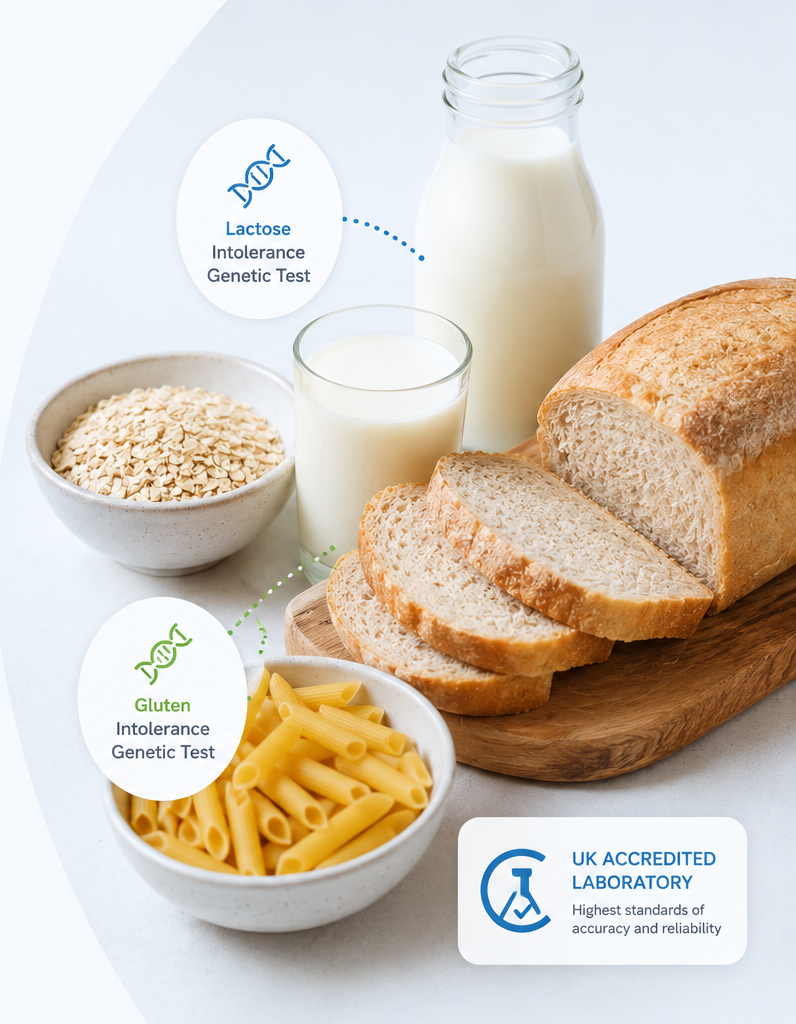
Discover whether you have a genetic predisposition to lactose or gluten intolerance with our UK-accredited laboratory tests.
All allergy tests we offer are based on validated IgE measurement — the gold standard for diagnosing true allergy — and on validated molecular diagnostic platforms with a robust peer-reviewed evidence base. Tests for gluten and lactose intolerance are genetic tests.
What Our Patients Say
"A world-renowned allergy and immunology specialist who provides outstanding advice and guidance for parents going through heartache resulting from multiple food allergies. His calm and educational approach has left us close to tears — after finally having answers to so many questions. My son has dozens of food and environmental sensitivities, intolerances, and a number of life-threatening food allergies, as well as numerous environmental issues that seemed near-impossible to pinpoint. In my opinion, the London Allergy and Immunology Centre is an exceptional centre of excellence."
— AZ, via Facebook
Our Clinical Credentials
Our allergy testing service is run in association with the London Allergy and Immunology Centre, based on Harley Street, London. Our consultants hold substantive NHS consultant posts and are recognised specialists in allergy and clinical immunology. All laboratory testing is performed in London's accredited facilities. Our service is available to patients across the whole of the United Kingdom — remotely by post or in person at our clinic.