Oral Allergy Syndrome and Component Allergy Testing
Many people notice itching or tingling in their mouth after eating fresh fruit, vegetables, or nuts. This reaction is often called oral allergy syndrome. Although symptoms may seem mild, the cause can differ from person to person. Because of this, correct diagnosis matters.
Today, allergy specialists know that specific proteins inside foods drive these reactions. Therefore, testing at a protein level gives clearer answers than traditional tests.
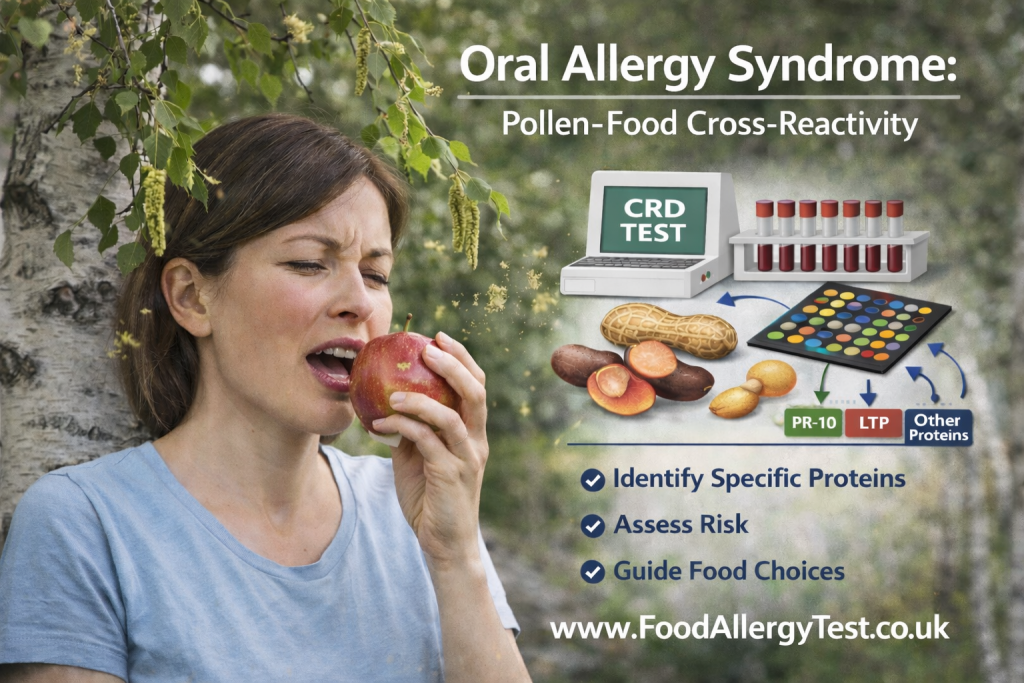
Oral allergy syndrome caused by pollen–food cross-reactivity, commonly linked to birch pollen and raw fruit such as apples.
What Is Oral Allergy Syndrome?
Oral allergy syndrome happens when the immune system confuses food proteins with pollen allergens. As a result, the body reacts to certain foods in the same way it reacts to pollen.
Symptoms usually:
– Start quickly after eating
– Affect the lips, mouth, or throat
– Improve when foods are cooked
However, not all reactions stay mild.
Why Proteins Matter
PR-10 Proteins – Often Mild
PR-10 proteins link closely to birch pollen allergy. These proteins break down easily with heat and digestion. Because of this, reactions tend to stay local.
People with PR-10 sensitisation often:
– React only to raw foods
– Tolerate cooked foods
– Have mild mouth symptoms
For many, this knowledge offers reassurance.
LTP Proteins – More Stable
Lipid transfer proteins, or LTPs, behave differently. They remain stable even after cooking. Therefore, they can cause stronger reactions.
LTP sensitisation may:
– Trigger hives or swelling
– Cause stomach pain
– Lead to breathing symptoms
In addition, exercise or alcohol may worsen reactions. For this reason, identifying LTP allergy is important.
Limits of Standard Allergy Tests
Traditional tests measure allergy to whole foods. However, they cannot show which protein causes the reaction. As a result, different allergy types may look the same.
Because of this:
– Some people feel falsely reassured
– Others avoid foods without need
Clearly, a more detailed test helps.
What Is Component Allergy Testing?
Component allergy testing looks at individual allergen proteins instead of whole foods. This approach explains not just what you react to, but why.
As a result, it helps to:
– Clarify the cause of symptoms
– Assess allergy risk more accurately
– Support safer food choices
Recent studies show that this method improves diagnosis and care.
Who May Benefit?
Component testing may help if you:
– Have mouth symptoms after eating fresh foods
– Notice changing or unclear reactions
– Want clearer guidance on food safety
With better information, decisions become easier.
A Clearer Way Forward
Allergy care is changing. Instead of broad labels, testing now focuses on personal risk. Therefore, component allergy testing supports a safer and more confident approach to food allergy management.
